The Social impact of Asian cinema in Hollywood.
In this essay I will be using the film Parasite (Bong Joon Ho,2019) as a case study to analyse the social impact that Asian cinema has had over the years in Hollywood. This analysis of Asian cinema comes after being exposed to many great films coming from the Korean, Hong Kong, and Japanese cinema industries and how they have taken generic Hollywood conventions and mixed them together with a unique narrative and cinematic techniques that have originated in the Asian market. In this essay, I will be arguing that over the last 2 decades the rise of social awareness for the Asian cinematic industry has put it on par with the European film market and Hollywood.
I will be using articles and previous films from Asian cinema to back up my point. I will apply the research that I have compiled to Parasite and use my findings to produce a viable and concise argument for my chosen question. I will explore the beginnings of Asian cinema and see how the market has progressed over the years. I will also explore the impact certain films from the Asian market have made on the industry and use quotes from well known Asian and Non-Asian directors to gauge what the filmmakers themselves believe on this topic. To counter this I will also be looking at the audience reception of Asian cinema to see not only see how the filmmakers see these films but how audiences from different cultures and backgrounds view Asian cinema.

Up until the beginning of the last decade Asian cinema was not entirely taken seriously in the western market. However, a few of Korean director Bong Joon Ho’s finest works such as Parasite, Snowpiercer (Bong Joon Ho,2013) and Okja (Bong Joon Ho,2017) have really put the Asian cinematic market on par with other big western cinematic markets such as England, Italy, and France. In the last couple of years, Asian cinema has even gone as far as to rival Hollywood with Parasite dominating the 2020 academy awards by winning 4 OSCAR’s including Best Picture, Best Foreign Picture, and Best Screenplay and high profile Hollywood actors and actresses such as Jake Gyllenhaal, Chris Evans and Tilda Swinton spearheading several Korean blockbusters. Along with its OSCAR wins Parasite also picked up Best Foreign Film at the Golden Globes and BAFTA’s whilst also winning the prestigious Palme D’or at Cannes film festival, becoming the second Asian film in a row to win the award after Shoplifters (Hirokazu Kore-eda,2018) in 2018.
Korean cinema has really been at the forefront of this revolution producing cinematic masterpieces consistently throughout the last 100 years. In an interview with NPR Bong Joon Ho expressed that “Compared to Japanese or Hong Kong film, the history of Korean cinema is relatively lesser known to American and European audiences,” he added that “I hope, due to the opportunities that have arisen from Parasite, people will realise that Korean cinema has also had a lot of masters.” Korean cinema has also caught the eyes of some of Hollywood’s great directors with Pulp Fiction (Quentin Tarantino,1994) director Quentin Tarantino praising Bong Joon Ho and his work at a surprise visit to the Busan International Film Festival. Tarantino would have high praise for Joon Ho as he described the Korean director as “Like Spielberg in his prime”.
While accepting his Golden Globe for Best Foreign Film, Bong Joon Ho wonderfully put to the audience in attendance that “once you overcome the 1-inch-tall barrier of subtitles, you will be introduced to so many more amazing films”. This proved to be one of Joon Ho’s more memorable quotes from his 2020 awards run as it proves to be a rallying cry for more people to watch foreign films and not be afraid of subtitles and just to enjoy the cinematic mastery that certain countries have to offer.

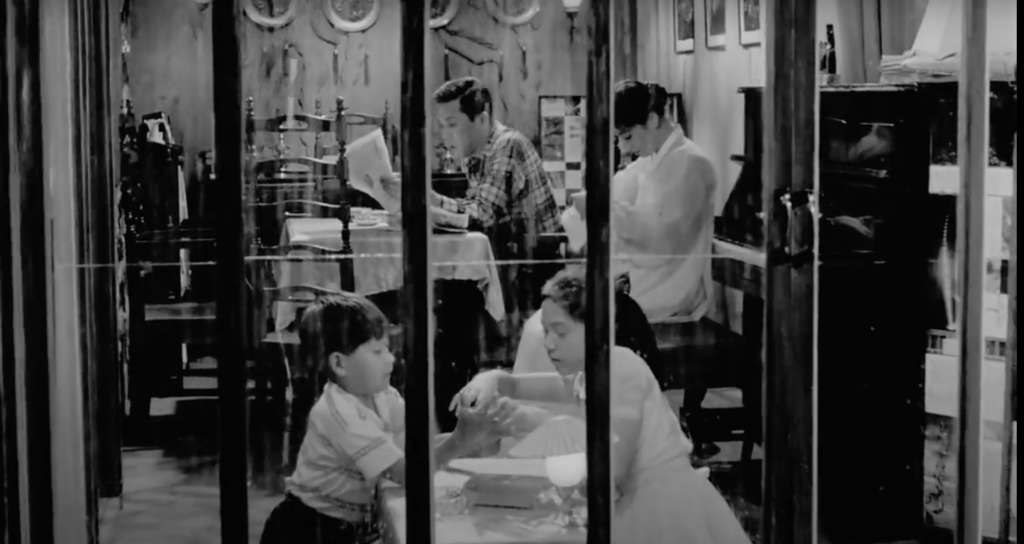
Korea’s cinematic presence didn’t just appear out of thin air with the success of Parasite. Korean cinema has been thriving in silence for hundreds of years from the end of the first world war through to the golden age of Korean cinema in the 60’s to the recent global success in the late 2010s where it is finally having its time to shine and getting the plaudits that it deserves. One of the first Korean cinematic masterpieces was The Righteous Revenge (Do-San Kim,1919) which was made during the Japanese occupation of Korea during the late 1900s. In a GQ article about the legacy of Korean cinema, the director of the London Korean Film Festival Hyun Jim Cho describes The Righteous Revenge as “half cinema, half theatre”. During the 1960s there was a brief spell of peace in Korea which inspired the countries first golden age of cinema. Jim Cho explains that this gap between dictatorships in the early 60’s “pushed a lot of film artists to create something very original”. Jim Cho then goes onto compare this time of creative freedom and prosperity in Korea to Italy’s neorealism era and the state of Polish cinema after communism. “Because society is in, you know, a shithole, it gives artists inspiration to make something challenging,” says Jim. One of the stands out films during the first golden age in Korea was The Housemaid (Ki-young Kim,1960). Joon Ho has credited this film as one of the influences for Parasite and has gone on record as calling it a “spiritual ancestor” of his 2020 Oscar-winning epic. The Housemaid follows a piano teacher as he asks his new student for help finding someone to assist his exhausted wife with the housework: the new arrival, beautiful and odd, terrorises the family and exposes their deepest flaws. You can clearly see where the inspiration for Parasite comes from.
Korean cinema isn’t the only Asian market that has produced cinematic masterpieces. Hong Kong has been producing high-quality films for the last century including In the Mood For Love ( Wong Kar-Wai,2000), Chunking Express (Wong Kar-Wai,1995), and Boat People (Ann Hui,1982). Even though these are considered excellent forms of cinema the western perception of Hong Kong cinema was always the martial arts films such as The Way of the Dragon (Bruce Lee,1972), Fist of Fury (Lo Wei,1972) and Crouching Tiger, Hidden Dragon (Ang Lee,2000). These films were seen as spectacles and were not truly appreciated for the cinematic mastery that they brought to the silver screen. The main pioneers of Hong Kong cinema were directors John Woo and Wong Kar-Wai. Woo produced some classics such as A Better Tomorrow (John Woo,1986) and Hard-Boiled (John Woo,1992) on home soil and eventually made his way into Hollywood with the film Face Off (John Woo,1997). On the other hand, Kar-Wai decided to stick in Hong Kong to direct legendary Hon Kong classics such as Chunking Express and Ashes of Time (Wong Kar-Wai,1994).
Much like what Parasite did for the Korean cinema industry, films like Chunking Express and In the Mood for Love really put the west on notice and showcased the talent and true cinematic genius that comes from Asia especially Hong Kong and Korea. It broadened the minds of cinephiles from the west and made them research these wonderful films and discover a whole new world of cinema. Only two Hong Kongese films have been nominated at the Academy Awards for Best Foreign Feature Film. These films were Raise the Red Lantern (Zhang Yimou,1991) and Farewell My Concubine (Chen Kaige,1993).
Along with the Hong Kong and Korean film industry, Japan has been producing legendary and technical marvels with films such as Seven Samurai (Akira Karusawa,1954) and Spirited Away (Hayao Miyazaki,2001) becoming raging successes both in their homelands and in Hollywood and Europe. Japan’s golden age came after the second world war during the early ’50s as the Japanese “were not only eager but downright desperate to see the replaying of their national narrative, historical and contemporary, in film”. Japan’s hunger to restore national pride and put the horrors of the war behind them birthed some of the greatest directors Asia and the world has seen. During the early stages of the Japanese golden age “films by the prewar masters were surpassed in popularity by those of Kurosawa, Tadashi Imai, Keisuke Kinoshita, and Kon Ichikawa, among others,”.Films were now being made from the angle of the oppressed and really sympathized with the victims of the gruesome violence. Examples of this can be found in Imai’s Tower of Lillies (Tadashi Imai,1953) and Until We Meet Again (Tadashi Imai,1950), both are credited as being “intensely moving portraits of men, women, and children caught in the web of war”. However this post-war mood of sorrow and forgiveness was no better captured than in Ichikawa’s The Burmese Harp (Kon Ichikawa,1956). This story follows a “Japanese soldier who remained in Burma to come to terms with the effects of his country’s crimes”.
This new post-war attitude towards filmmaking proved to be a much-needed turning point in Japanese history both culturally and in terms of their film industry. Like a phoenix from the ashes, the Japanese film industry took the pain and regret of the second world war and harnessed it and turned it into a beautiful blossom tree of creative talent and freedom which propelled Japan to having one of the oldest and largest film industries in the world which now sits 4th in the world in terms of the largest cinematic industries by the number of films produced. Even though Parasite has brought the eyes and the attention of the world onto the Asian film industry, some could argue that the Japanese were the first from Asia to conquer the Hollywood mountain and stake their claim as the pioneers of Asian cinema with Spirited Away winning Best Animated Feature Film in 2002 and La Maison En Petits Cubes (Kunio Kato,2008) winning Best Animated Short Film at the Academy Awards in 2008, both becoming the first Asian films to win in those categories.

Things have come a long way since the days of Karusawa and Kar-Wai with the western world and Hollywood starting to appreciate the genius that is coming from Asia. In an article published by Yale University in 2003 titled ‘The Asian Factor in Hollywood,’ it says that one of the reasons that it has taken so long for the west to embrace Asian cinema would be that it is often criticised for “overwhelming global audiences with ‘American culture’ “. However the article goes onto to say that “evidence from the past twenty years shows that Hollywood is expanding its embrace to include actors from Hong Kong, scripts from South Korea, and production facilities in New Zealand and China”. With the recent success of Parasite, Hollywood sees the ever-growing Asian cinematic market as the “next great frontier”. The article labels one of the main reasons for the latest growth of Asian films in Hollywood is that “trade liberalization has allowed many more Hollywood movies into Asian theaters, and economic growth has given more people the means to see them”. Another factor would be that people are more exposed to cinema from different countries now more than ever and Hollywood is slowly becoming more and more diverse and can no longer be seen as a “monolithic institution with only one style or method”.
Even though progress is being made over the last 70 years only 8 films of Asian origin have won Best Foreign Feature Film at the Oscars. These being Rashomon (Akira Karusawa,1951), Gate of Hell (Teinosuke Kinugasa,1954), Samurai II: Duel at Ichijoji Temple (Hiroshi Inagki,1955), Crouching Tiger, Hidden Dragon, Departures (Yōjirō Takita,2008), A Separation (Asghar Farhadi,2011), The Salesman (Asghar Farhadi,2016) and Parasite. However with 50% of those wins coming in the last 12 years and Parasite’s Best Picture win becoming the first non-English and Asian film to win the prestigious award, things are looking up for the Asian film industry.
To sum up, everything that has been stated, Throughout the last 20 years due to the rise of social media and people being more exposed to foreign cinema than ever before, the Asian cinema industry has leapfrogged a lot of the western powerhouses into becoming one of the most profligate and creatively talented industries in film. With the help of Parasite’s multiple Academy Award wins the western world has truly been put on notice and is starting to appreciate the cinematic genius that is coming from Asia. With Hollywood becoming more and more diverse every year Asian cinema is finally getting the spotlight that it deserves and the recent success of films like Parasite and Shoplifters has truly propelled the Asian cinema industry to be on par with Hollywood. However, even though the Asian cinema has come along way from the 50’s there are still certain aspects that hold it back from reaching its full potential.
Final Essay Word Count: 2,183
Bibliography:
IMDb. 2020. A Better Tomorrow (1986) – Imdb. [online] Available at: <https://www.imdb.com/title/tt0092263/?ref_=nv_sr_srsg_3> [Accessed 23 May 2020].
IMDb. 2020. Ashes Of Time (1994) – Imdb. [online] Available at: <https://www.imdb.com/title/tt0109688/?ref_=nv_sr_srsg_0> [Accessed 23 May 2020].
IMDb. 2020. Boat People (1982) – Imdb. [online] Available at: <https://www.imdb.com/title/tt0084807/?ref_=nv_sr_srsg_0> [Accessed 23 May 2020].
IMDb. 2020. Chungking Express (1994) – Imdb. [online] Available at: <https://www.imdb.com/title/tt0109424/?ref_=nv_sr_srsg_0> [Accessed 23 May 2020].
IMDb. 2020. Face/Off (1997) – Imdb. [online] Available at: <https://www.imdb.com/title/tt0119094/?ref_=nv_sr_srsg_0> [Accessed 23 May 2020].
IMDb. 2020. Hard Boiled (1992) – Imdb. [online] Available at: <https://www.imdb.com/title/tt0104684/?ref_=nv_sr_srsg_0> [Accessed 23 May 2020].
IMDb. 2020. Himeyuri No Tô (1953) – Imdb. [online] Available at: <https://www.imdb.com/title/tt0128250/?ref_=nv_sr_srsg_1> [Accessed 23 May 2020].
IMDb. 2020. Okja (2017) – Imdb. [online] Available at: <https://www.imdb.com/title/tt3967856/?ref_=nv_sr_srsg_0> [Accessed 23 May 2020].
IMDb. 2020. Parasite (2019) – Imdb. [online] Available at: <https://www.imdb.com/title/tt6751668/?ref_=nv_sr_srsg_3> [Accessed 23 May 2020].
IMDb. 2020. Pulp Fiction (1994) – Imdb. [online] Available at: <https://www.imdb.com/title/tt0110912/?ref_=nv_sr_srsg_0> [Accessed 23 May 2020].
IMDb. 2020. Snowpiercer (2013) – Imdb. [online] Available at: <https://www.imdb.com/title/tt1706620/?ref_=nv_sr_srsg_3> [Accessed 23 May 2020].
IMDb. 2020. The Burmese Harp (1956) – Imdb. [online] Available at: <https://www.imdb.com/title/tt0049012/?ref_=nv_sr_srsg_0> [Accessed 23 May 2020].
IMDb. 2020. The House Of Small Cubes (2008) – Imdb. [online] Available at: <https://www.imdb.com/title/tt1361566/?ref_=fn_al_tt_1> [Accessed 23 May 2020].
IMDb. 2020. The Housemaid (1960) – Imdb. [online] Available at: <https://www.imdb.com/title/tt0150980/?ref_=nv_sr_srsg_3> [Accessed 23 May 2020].
IMDb. 2020. The Righteous Revenge (1919) – Imdb. [online] Available at: <https://www.imdb.com/title/tt0010631/?ref_=nv_sr_srsg_0> [Accessed 23 May 2020].
IMDb. 2020. The Way Of The Dragon (1972) – Imdb. [online] Available at: <https://www.imdb.com/title/tt0068935/?ref_=nv_sr_srsg_0> [Accessed 23 May 2020].
IMDb. 2020. Walt Disney – Imdb. [online] Available at: <https://www.imdb.com/name/nm0000370/?ref_=nv_sr_srsg_1> [Accessed 23 May 2020].
References:
2019. The Housemaid (1960) – Hanyo [Click CC For English Subtitles]. Available at: <https://www.youtube.com/watch?v=-J_HTZFC32s&list=PLGGc7qqJ5JQmOInaLsdowICtufqf0u3tc&index=2&t=90s> [Accessed 20 May 2020].
A Better Tomorrow. 1986. [film] Directed by J. Woo. Hong Kong: Fortune Star Media Limited.
A Seperation. 2011. [film] Directed by A. Farhad. Iran: Filmiran.
Ashes of Time. 1994. [film] Directed by W. Kar-Wai. Hong Kong: Newport Entertainment.
Boat People. 1982. [film] Directed by A. Hui. Hong Kong: Blue Bird Film Company.
Chang, J., 2020. ‘The 1-Inch-Tall Barrier Of Subtitles’: Bong Joon Ho Rightly Calls Out Hollywood Myopia. [online] Los Angeles Times. Available at: <https://www.latimes.com/entertainment-arts/movies/story/2020-01-06/golden-globes-parasite-foreign-film-oscars> [Accessed 23 May 2020].
Chungking Express. 1995. [film] Directed by W. Kar-Wai. Hong Kong: Ocean Shores Video.
CriterionCollection, 2012. In The Mood For Love – Corridor Glance. Available at: <https://www.youtube.com/watch?v=ypY9OaKCfRU> [Accessed 20 May 2020].
Crouching Tiger,Hidden Dragon. 2000. [film] Directed by A. Lee. Hong Kong: Sony Pictures Releasing.
Departures. 2008. [film] Directed by Y. Takita. Japan: Tokyo Broadcasting System.
En.wikipedia.org. 2020. Cinema Of Japan. [online] Available at: <https://en.wikipedia.org/wiki/Cinema_of_Japan> [Accessed 21 May 2020].
En.wikipedia.org. 2020. List Of Academy Award Winners And Nominees For Best International Feature Film. [online] Available at: <https://en.wikipedia.org/wiki/List_of_Academy_Award_winners_and_nominees_for_Best_International_Feature_Film#Winners_and_nominees> [Accessed 22 May 2020].
En.wikipedia.org. 2020. List Of Hong Kong Submissions For The Academy Award For Best International Feature Film. [online] Available at: <https://en.wikipedia.org/wiki/List_of_Hong_Kong_submissions_for_the_Academy_Award_for_Best_International_Feature_Film> [Accessed 21 May 2020].
En.wikipedia.org. 2020. List Of Japanese Academy Award Winners And Nominees. [online] Available at: <https://en.wikipedia.org/wiki/List_of_Japanese_Academy_Award_winners_and_nominees> [Accessed 21 May 2020].
En.wikipedia.org. 2020. Palme D’or. [online] Available at: <https://en.wikipedia.org/wiki/Palme_d%27Or> [Accessed 22 May 2020].
Face Off. 1997. [film] Directed by J. Woo. United States: Paramount Pictures.
Farewell My Concubine. 1993. [film] Directed by C. Kaige. Hong Kong: Beijing Film Studio.
Fist of Fury. 1972. [film] Directed by L. Wei. Hong Kong: Golden Harvest.
Gate of Hell. 1954. [film] Directed by T. Kinugasa. Japan: Daiei Film.
Hard Boiled. 1992. [film] Directed by J. Woo. Hong Kong: Golden Princess Film Production.
Hong Kong, T., 2020. The 100 Best Hong Kong Movies. [online] Time Out Hong Kong. Available at: <https://www.timeout.com/hong-kong/film/best-hong-kong-movies> [Accessed 20 May 2020].
Hyo-won, L., 2013. Quentin Tarantino: ‘Korea’s Bong Joon Ho Is Like Spielberg In His Prime’. [online] The Hollywood Reporter. Available at: <https://www.hollywoodreporter.com/news/quentin-tarantino-koreas-bong-joon-647767> [Accessed 19 May 2020].
In the Mood For Love. 2000. [film] Directed by W. Kar-Wai. Hong Kong: Block 2 Pictures.
Jabar, R., 2020. Parasite Cleaning House Scene. Available at: <https://www.youtube.com/watch?v=e7JPNXt_oqM> [Accessed 22 May 2020].
Klein, C., 2003. The Asia Factor In Global Hollywood | Yaleglobal Online. [online] Yaleglobal.yale.edu. Available at: <https://yaleglobal.yale.edu/content/asia-factor-global-hollywood> [Accessed 22 May 2020].
La Maison En Petits Cubes. 2008. [film] Directed by K. Kato. Japan.
Levesley, D., 2020. Parasite Proves South Korea Has Been At The Forefront Of Cinema For Years. [online] British GQ. Available at: <https://www.gq-magazine.co.uk/culture/article/parasite-korean-cinema> [Accessed 19 May 2020].
Lilies, T. and Imai, T., 2020. MUBI. [online] Mubi.com. Available at: <https://mubi.com/films/tower-of-lilies> [Accessed 21 May 2020].
Okja. 2017. [film] Directed by B. Ho. United States: Netflix.
Ordoña, M., 2020. Why Bong Joon Ho Actually Won Three Oscars This Year, Not Four. [online] Los Angeles Times. Available at: <https://www.latimes.com/entertainment-arts/movies/story/2020-02-10/oscars-bong-joon-ho-parasite-wins> [Accessed 19 May 2020].
Parasite. 2019. [film] Directed by B. Ho. South Korea: CJ Entertainment.
Pulp Fiction. 1994. [film] Directed by Q. Tarantino. United States: Miramax Films.
Pulvers, R., 2020. ‘What Is Japanese Cinema?’ Review: A Deft And Engaging History Of Japanese Film | The Japan Times. [online] The Japan Times. Available at: <https://www.japantimes.co.jp/culture/2020/04/04/books/book-reviews/what-is-japanese-cinema/#.XsZ9FC-ZOu5> [Accessed 21 May 2020].
Raise the Red Lantern. 1991. [film] Directed by Z. Yimou. Hong Kong: Orion Classics.
Rashomon. 1951. [film] Directed by A. Karusawa. Japan: Daiei Film.
Samurai II: Duel at Ichijoji Temple. 1955. [film] Directed by H. Inagki. Japan: Toho Studios.
Seven Samurai. 1954. [film] Directed by A. Karusawa. Japan: Toho.
Shoplifters. 2018. [film] Directed by H. Kore-eda. Japan: GAGA Pictures.
Snowpiercer. 2013. [film] Directed by B. Ho. South Korea: CJ Entertainment.
Spirited Away. 2001. [film] Directed by H. Miyazaki. Japan: Studio Ghibli.
The Burmese Harp. 1956. [film] Directed by K. Ichikawa. Japan: Nikkatsu.
The Housemaid. 1960. [film] Directed by K. Ki-Young. South Korea: Seki Trading Co.
The Righteous Revenge. 1919. [film] Directed by D. Kim. South Korea.
The Salesman. 2016. [film] Directed by A. Farhadi. Iran: Memento Films Production, Asghar Farhadi Production, Arte France Cinéma.
The Way of the Dragon. 1972. [film] Directed by B. Lee. Hong Kong: Golden Harvest.
Tower of Lilies. 1953. [film] Directed by T. Imai. Japan.
Until We Meet Again. 1950. [film] Directed by T. Imai. Japan.
 Jack Diamond's Critical Analysis