By Jack Diamond.
In this essay I will be exploring the ideology of the good vs evil narrative in fantasy cinema. The two films that I will be going into more detail than others are Lord of the Rings: Return of the King (Peter Jackson,2003) and Avengers: Endgame (The Russo Brothers,2019). These two films both conclude their respective sagas, and both have the narrative of good vs evil at the forefront. Both deal with other prominent themes such as grief, sacrifice, love and honour. They take the raw emotions of everyday life and put them in a fantasy setting to create two masterpieces that speak to the audience about human values, all the while providing a mind-blowing spectacle that lives in the memory of everyone who went to see these films. Both sets of heroes face improbable odds in order to overcome the evil that faces them.

I will be exploring a more in-depth look at the good vs evil narrative in fantasy cinema, such as the fact that the concept of good vs evil is flawed. Its more like good intentions vs evil intentions. No one villain in fantasy cinema is purely evil. Villains such as Thanos, Darth Vader, Voldemort and Saruman all believed that their ideologies and actions were for the greater good and that the quality of life for the masses would be improved with their actions. For all these fantasy villains their ideologies and view of the world was evil and twisted but them as people were not truly evil, all they wanted to do was to help people. For many of these villains the environment in which they were brought up in made them turn to evil. For Thanos it was when no one on his home world would listen to his plan to help his community thrive. For Darth Vader it was how he was treated by his fellow Jedi when he was still Anakin Skywalker. And finally, for Voldemort he was driven to evil by outside influences at Hogwarts. All these iconic villains were driven to do evil in their weakest moments. This is the same for most villains in fantasy cinema. They believe that the world is against them and that the only way to find closure is to rid the world of those that have wronged them. This applies most to the Avengers Villain Thanos. Upon first seeing Thanos in Avengers (Joss Whedon,2012) we were introduced to an extremely intimidating figure who had the potential to lay waste to earth and the Avengers.
While he was being teased in the MCU with cameos in Guardians of the Galaxy (James Gunn,2014) and Avengers: Age of Ultron (Joss Whedon,2015), we saw the ever-looming presence of the mad titan over the Avengers. Until he finally put his master plan into motion in Avengers: Infinity War (The Russo Brothers,2018). Throughout many of his encounters in Avengers: Infinity War with the Avengers themselves he would always speak very eloquently and had a gravitas in his voice that would lead people to believe in his cause. Thanos believed that his actions were necessary for survival and not an act of evil and malice. His plan was to rid the universe of half its population so that the other half could thrive with the abundance of resources left over. He believed that this was for the greater good and that civilisation would thrive because of his actions. What connects all these villains together is their consciousness was clouded by the hurt that they had received from others. Hatred grew in them until the point where in boiled over and they took that hate out on innocent people.In Avengers: Endgame and Lord of the Rings: Return of the King this narrative is prominent and the driving force of both films. The evil characters in these films, Thanos and Saruman are defeated and reduced to the same state of mind that they were in at the beginning of their stories, weak beings blaming everyone but themselves for their misfortunes. When in their last moments we see these characters in their true forms. They are not purely evil they are just misguided souls looking for a place in the universe. And for these characters turning to evil and hurting others was their way of putting their mark on the universe.
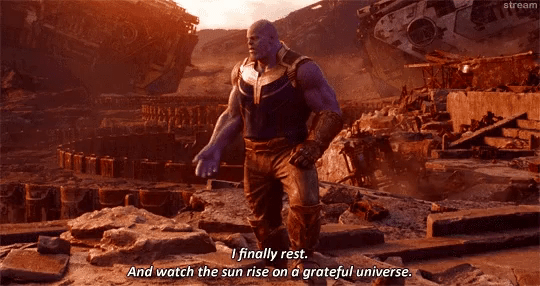
In Avengers: Endgame the main storyline consists of the heroes trying to exact revenge on the evil forces that destroyed their world in Avengers: Infinity War. They spend the majority of the film trying to write the wrongs of the previous film. This film had a previously unexplored gritty and dark look at the Avengers. The premise of the previous Avengers films and indeed for most of the MCU was the hero’s vs the villains, good vs evil. However, in this film it was truly the heroes battling against their own consciousnesses due to the cataclysmic failure in the previous film. So, the element of good vs evil is truly not as prominent in this film as it was in the previous films. The evil force, in this instance Thanos and his army, is merely in place to personify the Avengers battle against their own self-doubt and grief for those that they have lost. Upon meeting Thanos in the ruins of the Avengers facility towards the end of the film, the Avengers come face to face with the devil who has plagued them for so long. This also personifies the Avengers coming face to face with their own personal obstacles that they are now strong enough to overcome because they are together as a unit. Thanos says to the Avengers in that moment that they “couldn’t live with their own failure”. This puts the all the hero’s shortcomings into perspective and gives the Avengers a moment of contemplation.
In this situation both the heroes and the villains believe that they are doing what is best for the universe and their own cause. So, a Hero to one person could be a villain to another. A real-world example of this could be a countries people may see their militaries actions as noble and just but unprepared civilians who are suffering because of the conflict may see them as evil.
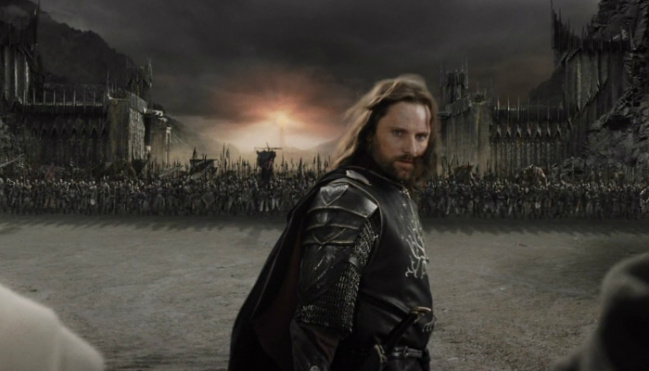
In Lord of the Rings: Return of the King the main storyline is the heroes of the story finally completing their journey and finally ridding themselves of the evil that has been haunting them for their entire quest. This evil comes in many forms in this film, such as the ring that Frodo first bears in Lord of the Rings: Fellowship of the Ring (Peter Jackson,2001), Saruman, Sauron and finally the internal struggle that various characters face when dealing with loss and burden that this journey has put on them. Much like in Avengers: Endgame, All the evil in this film is a personification of the internal struggle that many of characters are dealing with. Even though the Lord of the Ringssaga is renowned for its theme of good vs evil, the more prominent theme in this film and indeed in the other films and the Hobbit trilogy (Peter Jackson,2012-2014) is the internal struggle of the characters. Aragorn has the internal struggle of being to the heir to the throne of Gondor and how that burden would affect the people around him. The Hobbits have the internal struggle of protecting the ring and Frodo’s life. Also, some of the Hobbits have the struggle of being out of their comfort zone and being thrown into an adventure that none of them are prepared for mentally and physically. However the character who has the biggest burden to carry and the biggest internal struggle throughout the whole trilogy is Frodo Baggins. Across the entire trilogy of films Frodo carries the ring, and this alters his behaviour and makes him conflicted and volatile. This exemplifies the notion that no one is born evil, evil is put upon someone when they are in their in darkest moment and instead of seeking help from those around them, they turn to the darkness and it seems like the only way out.
The similarities that these films have is that they disguise the struggles and hurt that the heroes have as the evil characters. They personify all the hurt that the heroes have felt throughout their respective journeys. For both sets of heroes these films were the culmination of a hard and emotional journey that took a toll on everyone involved. They also share the theme of the good guys standing up for what is right and standing up for the moral future of the society that they live in. However, this idea of the good guy standing up for the good morals of the people has been completely fabricated by fantasy films such as Thor (Kenneth Branagh,2011), Harry Potter and the Philosophers Stone (Chris Columbus,2001) and Star Wars – Return of the Jedi (Richard Marquand,1983).
In folk tales and Greek theatre where many of these stories derived their inspiration there was never a protagonist fighting for the morals that he held so dear. It was quite the opposite most of the time, the protagonist would always find a way succeed by going against either his own morals or the ones of the moral compass character. Catherine Nichols writes in about this very subject in the Aeon. Catherine says that “In old folktales, no one fights for values. Individual stories might show the virtues of honesty or hospitality, but there’s no agreement among folktales about which actions are good or bad.” Therefore, we put such characters as Thanos, Saruman, Darth Vader and Voldemort in this category of evil yet they themselves do not construed themselves as evil. They are merely put in these boxes due to their morals and actions which is neither logical nor true, For Thanos sees Steve Rodgers as evil, as does Saruman see Gandalf as the enemy. These characters are labelled due to the fact of what code of morals that they stand by.
Nichols goes on to write in her article that “Good guy/bad guy narratives might not possess any moral sophistication, but they do promote social stability, and they’re useful for getting people to sign up for armies and fight in wars with other nations. Their values feel like morality, and the association with folklore and mythology lends them a patina of legitimacy, but still, they don’t arise from a moral vision. They are rooted instead in a political vision, which is why they don’t help us deliberate, or think more deeply about the meanings of our actions. Like the original Grimm stories, they’re a political tool designed to bind nations together.” This is what binds films such as Avengers: Endgame and Lord of the Rings: Return of the King, the notion that two sets of people should be driven to conflict due to the morals that each side holds. This is a damaging lesson for society, and it teaches us to strike conflict with those who have opposite views to us. Nichols mentions this particular subject in her article by saying that “The idea that whole categories of people should be locked up made the concentration camps possible”. In both these movies the ideology of good vs evil is an inherently flawed way of thinking and illogical when it comes to everyday life.
Both these films have a heroic sacrifice at their culminations which end up saving the day for the heroes. After a long journey which has bought sorrow and despair, it finally comes to an end with one last act of heroism. These films teach us the true meaning of friendship and the sacrifices it takes to save the ones who you love.
In conclusion, the concept of good vs evil in Avengers: Endgameand Lord of the Rings: Return of the King is flawed, and the real battle is between good intentions and bad intentions. The heroes and villains are split into these categories purely based on the way they think, and this is damaging societal lesson. The evil characters in both these films are personifications of the internal struggles that the heroes are feeling and when the villains are defeated it is the heroes finally overcoming their own internal battle.
Reference list:
- Avengers (Joss Whedon,2012)
- Avengers: Age of Ultron (Joss Whedon,2015)
- Avengers: Endgame (The Russo Brothers,2019)
- Avengers: Infinity War (The Russo Brothers,2018)
- Aeon, 2018.Nichols, The good guy/bad guy myth. New York City, New York, United States. Available at: https://aeon.co/essays/why-is-pop-culture-obsessed-with-battles-between-good-and-evil
- Guardians of the Galaxy (James Gunn,2014)
- Hobbit Trilogy (Peter Jackson,2012-2014)
- Harry Potter and the Philosophers Stone (Chris Columbus,2001)
- Lord of the Rings: Fellowship of the Ring (Peter Jackson,2001
- Lord of the Rings: Return of the King (Peter Jackson,2003)
- Prezi,2015. Baldwin, The Manifestations of Good vs Evil in film and literature. Available at: https://prezi.com/jipftclbiswu/the-manifestations-of-good-vs-evil-in-film-and-literature/
- Star Wars – Return of the Jedi (Richard Marquand,1983)
- Thor (Kenneth Branagh,2011)
- https://www.youtube.com/watch?v=iCMcSx1as3c
- https://www.youtube.com/watch?v=yZ7gOHW_gAQ
 Jack Diamond's Critical Analysis